
Featured Image: MTVH’s Steve Newcombe’s review of the roof space in my maisonette July 2024
I live in social housing and interestingly, the place I live overlooks a really interesting story of community, neighbourhood, participation and economic growth linked to that activity: I’m using that sense of place past and present to listen to and write people’s stories of work, housing and health.
Seeing things with a longer view, talking to people before and after the election has made me really understand why it’s important to see the economy and valuing learning, training, skills and experience as the potential of the whole country.
We need to unlock the learning, skills, knowledge within organisations and neighbourhoods to encourage people to always need to improve their practice and to feel pride in their work. The supply chain approach that pits professions and trades against each other, the precarity of work and housing (even for people working in housing where it’s a double dose demotivator) needs to become a thing of the past.
It’s got to be one team: work, health and wellbeing throughout the country.
When I was canvassing in Rushcliffe during the election people like Joe told me that although he lives in a nice home in Gamston, his gran and great gran live in Bulwell his great gran in social housing, his mum in privately rented housing.
His mum works part time for a GP, loves the community there and the fact that she’s close to her mum. When her landlord served her with a Section 21 Notice after twenty years. Joe said his mum’s and gran’s sudden insecurity in a place they thought they belonged in had a massive effect on him and his wife. They worked together and found her a house but it really made me think.
We all have friends, relatives, colleagues who’ve been affected by the unpredictability of the bit of the economy they work and live in and I think this is because we’ve been socialised to believe we live in a supply chain, and the needs of the supply chain trump the needs of the country.
After a recent repair in my MTVH maisonette I realised how true this is.
Steve Newcombe MTVH roofer showed me the roof space: his thought was that there could be damp and moisture issues probably because the roof space had previously been over insulated.
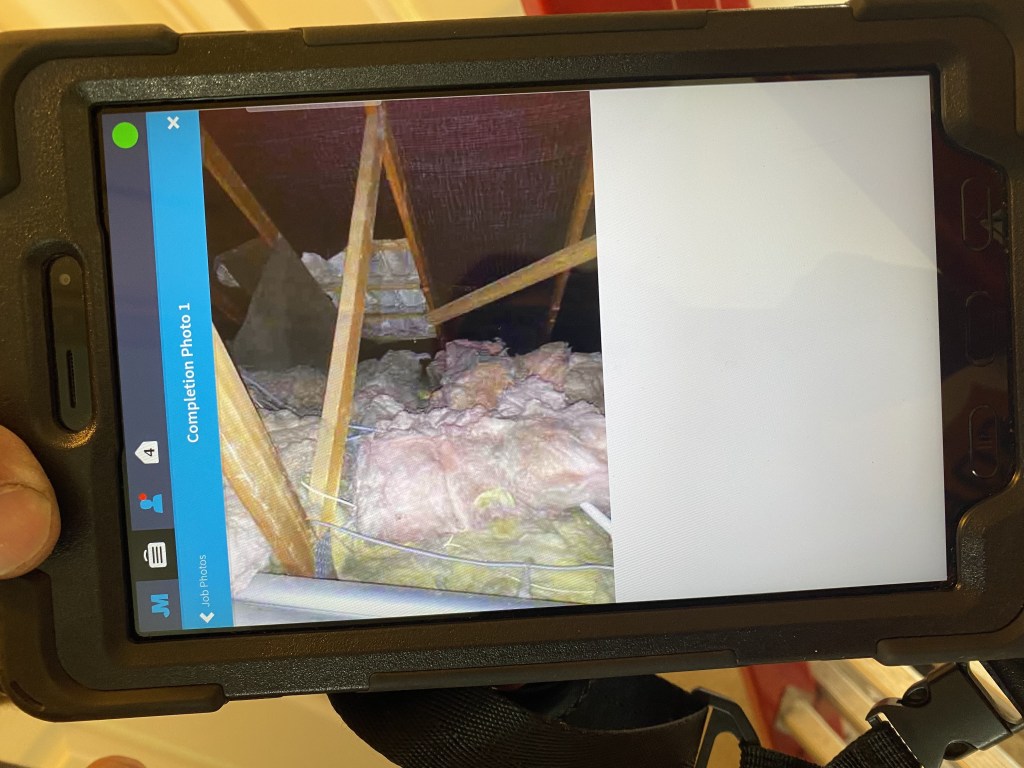
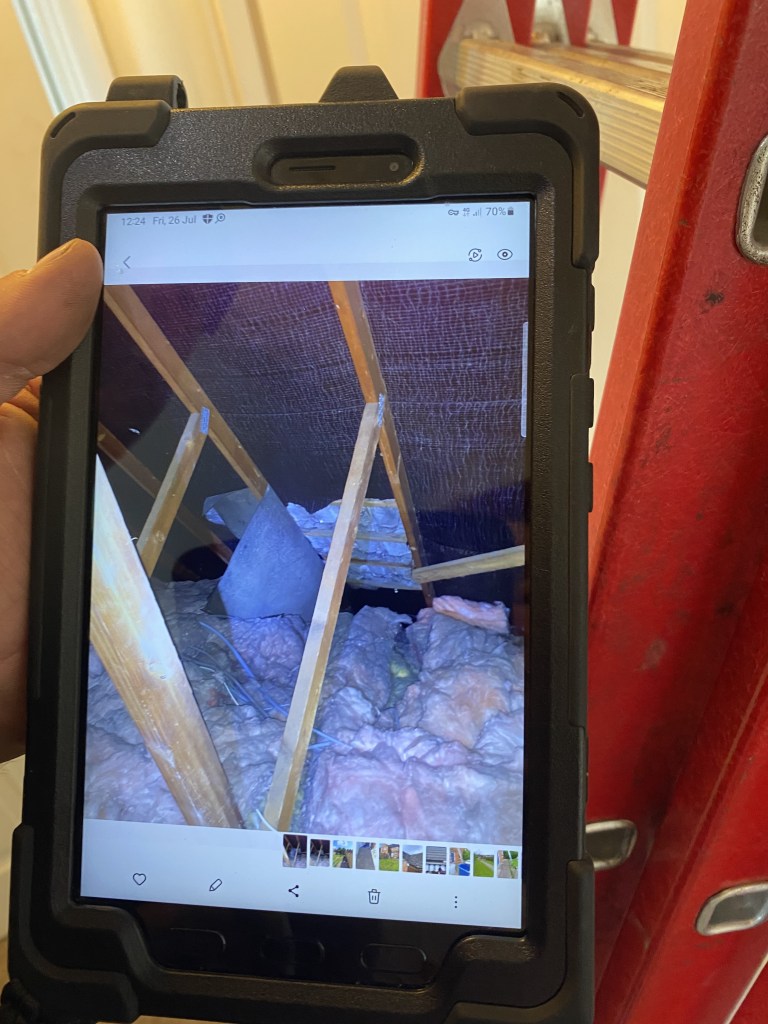
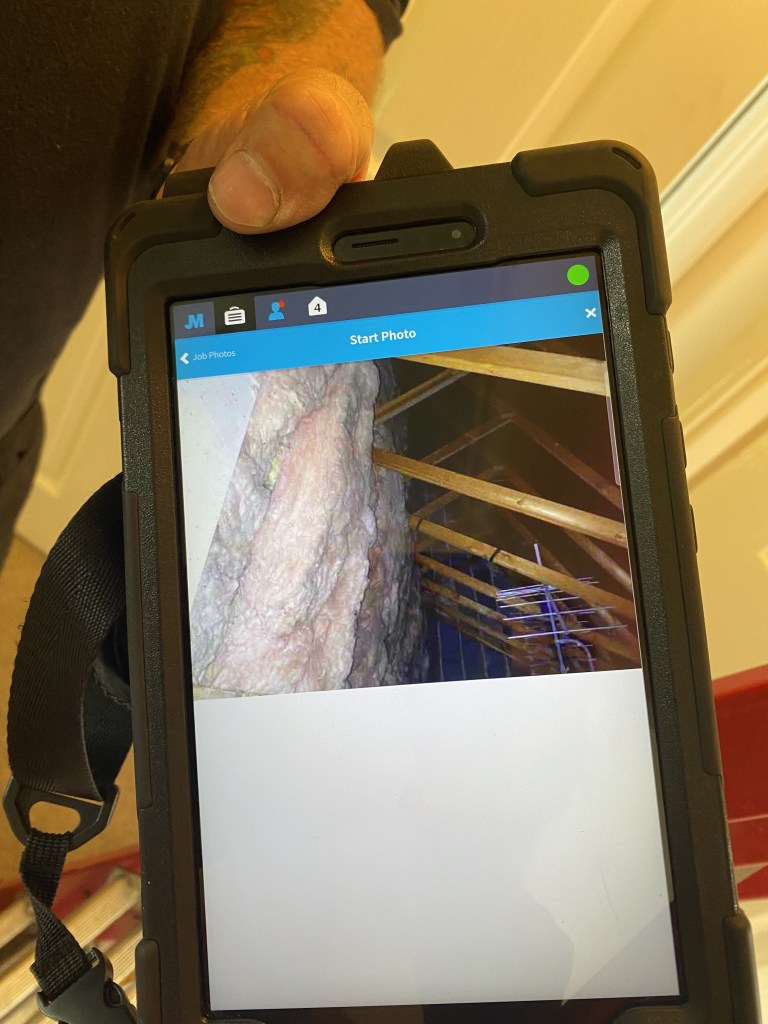
Steve showed me the over insulated space and put in staples to vent the rafters.
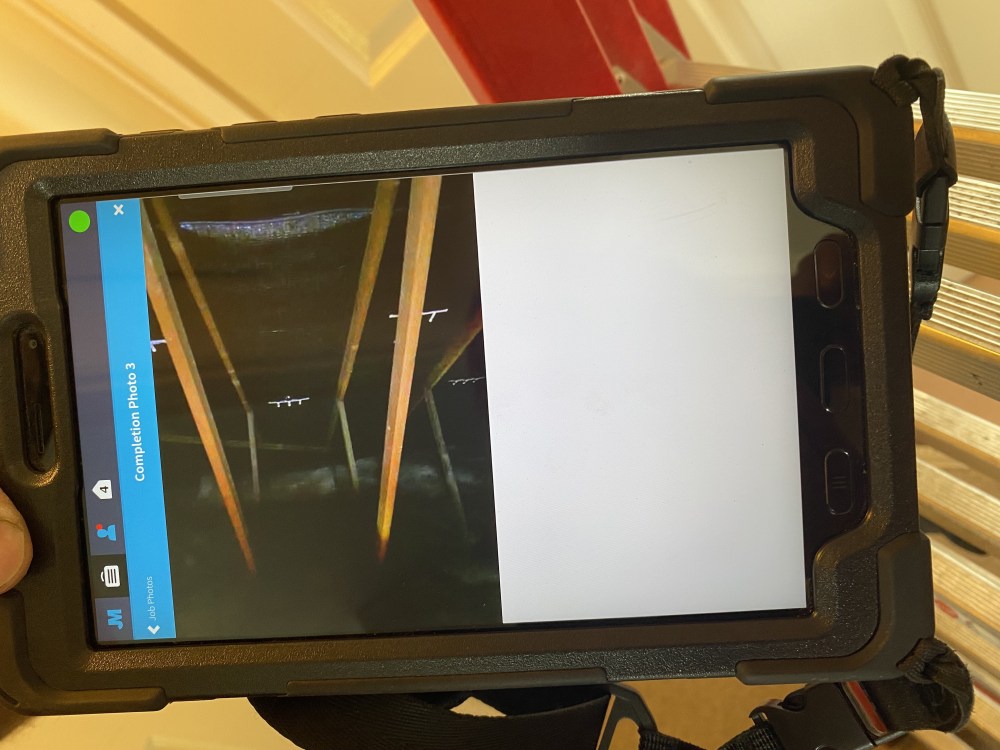
Above: Stapling to vent the roof space: source MTVH Steve Newcombe
Steve’s a practical professional, his first job was in a food factory, then in a quarry before taking an apprenticeship as a roofer in 2000: his last role was working for a modular housing company, after the homes were craned into place he worked to install the rooves. The company went into liquidation: Steve was without a role, applied to one of the ubiquitous agencies that circle this supply chain economy and he found his new role with MTVH: respect to MTVH! Modular Monitor notes that modular homes strategy is to be debated in parliament shortly.
The supply chain economy way of doing things has been a business and organisational norm over the last forty years. In that time precariousness, risk, poor health and churn have become a new normal: great people twisting themselves out of all recognition across society to fit their learning, skills, experience and insights into an arbitrary template of service and standards that has become increasingly difficult to meet.
I spoke to a senior manager at British Gas who confirmed that the loss of experienced engineers to the business (over the last twenty years but the most recent loss is 2021) is part of this anger, rejection of this impersonal way of dealing with highly skilled operations that in his judgement should take a week but are now being completed in a day and a half. GMB union have been supporting them to transform the unaccountable culture where skills, training and doing a great job are valued and developed.
We’ve had a very long time where good people across society have tried to adapt to a dysfunctional organisational culture from top to bottom where profit trumped service and genuine feedback. Employees and customers have twisted their learning, experience, training and skills to fit an impossible exemplar case study template rather than a living and growing understanding of the problem to be solved with colleagues and customers.
Supply chain culture has led to a working environment where people have been less able and motivated to draw attention to potential problems, risks and compromises made because of resource and time pressure. Grenfell was an example.
If things go wrong and even if things are going right the organisational culture is always in a state of anxiety (really because in housing for example it knows what it really needs is stable housing as infrastructure funding).
In the supply chain world though it’s been normalised to spend money on surveys and consultants who give good reputation by association so organisations have to spend more: it has become the norm to use PR/communications/Survey companies/expensive training companies to meet the legal compliance requirements of householder engagement.
Over time this leads the organisation to rely on the communications and PR consultants version of the service rather than the actual feedback from the actual context.
This supply chain culture until now has led to a ‘just the job, nothing more’ tick the compliance box approach to the way skilled and professional people have been able to do the job. then, weeks, months, years later their ‘future colleagues’ go in to do a job where their skills, training, motivation and aspiration have also been trimmed: it’s now normal to work to the order sheet not what you’ve actually noted, seen, observed.
What does this do to motivation, skills, learning, health and wellbeing?
This isn’t because anyone actively goes out thinking they’re going to do a poor job it’s just that the supply chain template they’re in restricts their ability to repair and restore, use their motivation, knowledge and skills to make things work well for everyone.
What this means though in (expensive) contracted out surveys is that the reasons why people with skills going out to a job can’t do the job first time it might be because (using their knowledge, skills, experience) they realise that the job they need to do isn’t on the sheet they’ve been given.
The customer feedback is in ignorance of the actual situation of the person who’s come to do the job because of the number of brokers and mediators between the provider of the service and the receiver. So reception by householders might be/is poor but not for the reasons the survey company’s results might indicate.
What I realised though is that if organisations like MTVH (a housing association) can evolve into a social housing builder and provider where it has funding to develop capacity beyond the supply chain ‘just in time’ of the last thirty years that not only will the fabric of the estate and the workforce grow in purpose and stature but communication and satisfaction with householders will become more congruent and develop to a much higher level.
MTVH responded to the govt request in 2021 for all housing providers with over 1,000 homes to provide a householder satisfaction survey. The survey was produced by IFF Research published 6th August 2024 using mainly telephone contacts 3,143 and 25 face to face interviews:
Overall satisfaction MTVH Survey by IFF Research
Satisfied with the overall service from MTVH
Householders Renting + Householders in shared ownership part mortgage/part rental
68.3% 36.7%
Keeping properties in good repair
Householders renting:
Overall satisfaction about repairs
71%
Satisfied with the time taken to complete their most recent repair
66.2%
Homes not meeting the Decent Homes standard
0.1%
Non-emergency repairs completed within MTVH’s timescale
83.9%
Emergency repairs completed within MTVH’s timescale
96.7%
Felt their home was well-maintained
70.5%
Maintaining building safety
Householders who rent Shared ownership part rental/part mortgage
Overall satisfaction on building safety
76.7% 60.4%
Rented homes and shared ownership part rental/part mortgage
Required gas safety checks carried out
99.6%
Required fire risk assessments carried out
100%
Required asbestos management surveys or re-inspections carried out
98.6%
Required legionella risk assessments carried out
100%
Required communal passenger lift safety checks carried out
100%
Respectful and helpful tenant engagement
Rented homes Shared ownership
Agree MTVH treated them fairly and with respect
75.3% 53.1%
Felt MTVH listened to their views and took actions
59.2% 27.3%
Felt MTVH kept them informed on points that matter to them
71% 52%
Effective complaints handling
Rented homes Shared ownership
Overall satisfaction on complaints handling
39.8% 18.9%
Number of Stage One complaints received per 1,000 homes (prior to taking to the housing Ombudsman)
101.1 109.5
Number of Stage Two complaints received per 1,000 homes
20.9 28.4
Stage One complaints responded to within Housing Ombudsman’s Complaint Handling Code timescales
87.2% 86.6%
Stage Two complaints responded to within Housing Ombudsman’s Complaint Handling Code timescales
87.6% 81%
Responsible neighbourhood management
Rented homes Shared ownership
Number of anti-social behaviour cases opened per 1,000 homes
23.3 (involving hate crimes: 0.3)
Overall satisfaction with the maintenance of communal areas
72.2% 51.8%
Satisfied with MTVH’s handling of anti-social behaviour
61.4% 29.8%
Felt MTVH makes a positive contribution to the neighbourhood
64.9% 30.9%
I’d argue that the householder satisfaction rates are good and excellent in areas where there’s a statutory obligation (that kind of overrides the supply chain culture that is always looking for ways to cut back on times, timings, numbers of visits rather than looking at the overall value of remediating poorly executed jobs thus revaluing the householder and skilled person’s shared goals in wanting the job done properly first time.
The supply chain model of the economy discourages innovation, creativity and innovation in the people it relies on. People like Steve can make a fantastic contribution: in the case of my roof space, he saw straight away that the problem was over insulation. It must be frustrating to have the knowledge and skills to see the big picture but not to be able to sort out the whole issue. This is what the supply chain approach to skills and trades has done to the excitement and motivation working people have when they acquire the skills and experience to solve a problem. It’s a false economy (literally(!)).
We need a way of remaking relationships between everyone involved at the neighbourhood level: MTVH at the local levels across its span is an exemplar of how energy and dynamism of the teams across the organisation deal with the supply chain way of working but householders and their workers know that the tech and communication tools used at the moment aren’t the right ones.

 signsofanopencity
You must be logged in to post a comment.