
Above: MTVH CEO Geeta Nanda who is leaving the organisation after sixteen years to be replaced in September by the previous CEO of Nottingham City Council, Mel Barrett
If you want to change the world, use the internet as a resource for real world change. A couple of weeks ago two thousand people logged in to hear how big social housing builders and place shaping providers thought the next couple of decades should be valued. The webinar was great, down to earth and practical.
The conversational richness of the webinar and input from the two thousand participants is part of that democratising process in housing that will create the ground for society wide regeneration of relationships and opportunities.
Martin Hilditch longtime housing researcher and campaigner and editor of Inside Housing hosted the webinar.
Speakers were Catherine Ryder, (who did a science degree at Exeter Uni) Chief Executive of PlaceShapers and has worked in audit, policy development and an increasingly rich range of housing related environments.
PlaceShapers is a network of housing associations across the UK that works to develop the contribution of housing associations to neighbourhoods and areas, build a culture around good housing that encourages the growth of opportunity, work and stability (see the story of a developer securing an estate in 1997 and securing planning on appeal in 2020 and housing now going ahead on their timeline)
Catherine is a former Director of the National Federation of Housing (the NFH been around since 1935, first housing associations to sign up: Kensington (1927) Bourneville (1906), Fulham, Letchworth (which didn’t get going until 1940), St Pancras House Improvement (1921), (see the ceremonial burning of vermin on the 6th anniversary of the St Pancras Improvement Society 1927) Newcastle on Tyne Housing Improvement Trust, Ripon Housing Improvement Society (which was registered in 1930) Wesley Hill IDS, Rhiwbina Garden Village ltd, Improving Tenants Association).
Below if you want to understand housing in relation to a desire for increasing democratic representation and participation this is great:
She talked of the benefits to the local economy of building good places for people to live and the long term commitment to building new homes that are affordable and why diversity in the sector is important.
An intelligent use of place allows employers, houses and providing access to employment homes that are near jobs, better for employers across public services and a range of jobs. Lacking an evidence base (I know this as I’ve seen examples where granular demographics about people’s actual jobs, housing in areas have been seen as negative indicators to ‘inward investment’ so people in occupational categories 4+ 5 have been invisibilised rather than seen as a dynamic part of the economy. This has actually had the effect of discouraging new productivities, growth and investment).
Without really transparent, congruent thought through information about the relatedness and interrelatedness of the economy, employers have withdrawn from areas. Catherine talked of a need for a strategic conversation: we need to build houses where people work and encourage employment where people live.
Housing employment -and skills!
Nick Atkin Chief Executive of Yorkshire Housing spoke of the ‘roller coaster of the last twenty years’ in housing. It starts with the affordable housing programme: housing starts are at lowest for the last eleven years: we need a long term approach and long term plan (longer than one political term).
Importance of housing: it needs to be part of an established infrastructure and taken out of politics: at this general election people prioritised it as fourth on the agenda, in the last election it was 9th. Over 9-12 months things change quickly, housing always needs to be part of the solution rather than over promising under delivering.
What is our ask? Certainty. Reclassification of housing investment in the same way as other major infrastructure projects then the supply/funding rollercoaster is removed.
Retrofit: and carbon credentials 1/6 homes are social rented housing associations quickest route to address this as 28% of homes emit carbon emissions.
Development is underpinned by finances, restarting our economy and a funding programme predicated on growth.
Housing associations have a great story to tell.
We know what you get when you invest in homes. Housing associations, (like people) need income certainty. Labour’s message is in rebuilding capacity in housing plans something I’ve never seen in my business career…!
We need to work with mayors to deliver regional priorities and to support regions where there are devolution deserts and those plans are forming. What does regeneration mean in different areas? Demolition? Rehab? Help to buy might be a good thing….?’
Greg Reed, Chief Executive of Places for People spoke. Places For People are a social enterprise managing 240,000 homes, working across the UK to plan, manage and build housing and leisure.
Greg is Canadian, worked for the bank of America, for Home Serve, then for Clarion Housing before Places For People. He sees his organisation and role as ‘a catalyst for change and I believe a rent settlement would allow the growth needed over the next ten years (that we stick to).
Places need land to drive delivery of the right homes in the right places only one in four local authority areas have local plans with the impact this has on regeneration.
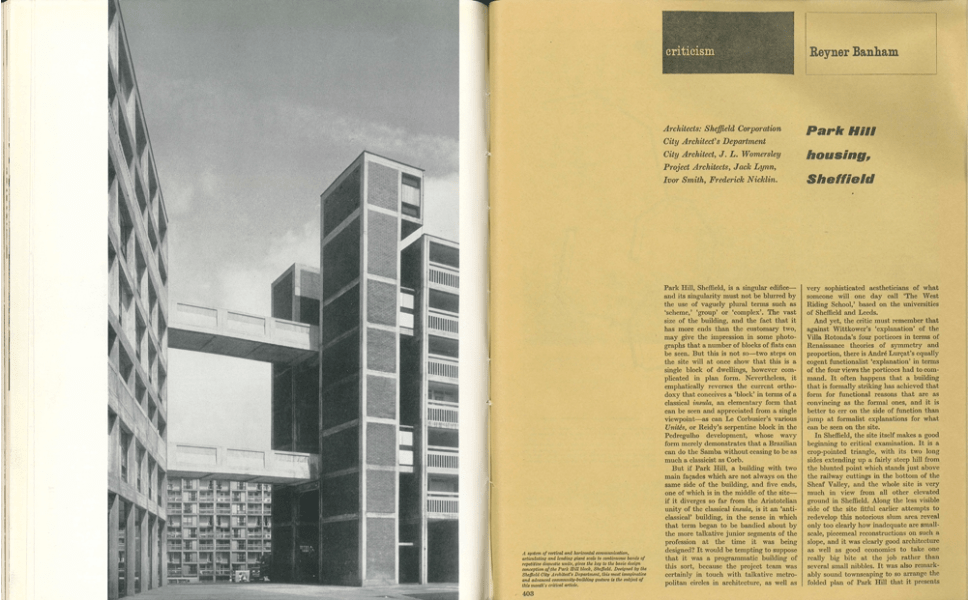
The bespoke big regeneration project with Igloo and Park Hill in Sheffield took twenty years: a little help from the govt could have been done a long time ago.
Below: Architects Journal article 1961 On Park Hill Sheffield:
Greg: Places for People Planning: we have 15,000 homes in the pipeline 2,000 completions for 2024 we need the planning system we had in the 1970’s…’
Geeta Nanda, chief executive of Metropolitan Thames Valley was awarded an OBE for services to housing in 2013 who’s done amazing things at MTVH spoke about the vital importance of skills development.
‘Agree with panel, what’s fantastic is ambition, that the government wants to do something is a good starter. Housing Associations come up with solutions speak coherently all have skills in different areas.
London initiatives such as the London Homes Coalition (and I found the London Homeless Coalition) need the skills to deliver the plan needed. Building Control: signing off high rise buildings, there are skills shortages within our industry there because if you can’t sign off there’s an issue: we need to plan longer term with contractors, local authorities and recognise that the skills need is different in different localities.
We have had net zero delivery and an ageing workforce, emigration and so a labour skills shortage: obviously we need to grow skills: roofers, carpenters, surveyors, bringing in women and ethnic minorities, low carbon retrofit skills all of these elevate the sector as will data expertise we need to remove barriers bring tech into the sector (2,600 people shortage in planned investment delivery).
At the moment we have very siloed programmes of funding delivery in the regeneration/decarbonisation fund/right to buy receipts/recycled right to buy programmes. There’s opportunity in the Affordable Homes Programme through connecting with the devolution agenda, rethinking organisation’s roles to bring these investment programmes together.
How do we bring these together? How do we make existing stock and new homes financial programmes to make these programmes a reality? How do we make existing money work harder/better to resolve the needs we see in our own homes?
Regeneration is fab: offering existing householders new homes, better places (improvement) -those concrete jungles go sometimes: it’s a win win placemaking can do this.
For profit Registered (Housing) Providers institutional investment coming into the market there’s chat around that capital. Lloyds recently published a report (covered by Inside Housing) supporting the additional delivery of social housing.
One of the things they talk about is could there be a different revenue model for social housing like PFI where HAs get additional housing revenue linked to building new homes (as well as rent).
Housing Associations need more income social housing interest cover being impacted needs to come from rents but is there another funding stream that doesn’t impact the govts balance sheet?
When I first started working in housing, bed and breakfast was a massive issue it was solved by housing associations leasing bed and breakfast properties from private landlords but we can’t get these leasing arrangements any more. (see the Museum of Homelessness)
In Waterloo under the arches tented city we got rid of this through having a rough sleepers programme. (New Rough Sleepers programme launched by the London Mayor Dec 2023, also Nottingham has a No Second Night policy).
Lots of solutions that have been around a long time, need to be tweaked. Need Housing benefit bill delivery models solutions. All less revenue HB and more from Cap expenditure moving away from housing benefit. There’s a school in Peckham 50% of children in temporary accommodation they need an immediate solution. There are around 74,500 families with children in temporary accommodation
Developers also need to evolve their understanding with Section 106 we need more connection, consultation etc. Managing agents, brokers the supply chains around development. Boilers an issue: building in retrofitting costs.
1990 Planning Act + Section 106
Section 106 is important -some Section 106s really good quality from developers -but there are a number that don’t meet standards because they’re building in future retrofitting problems. We need a standard. There’s a role for the mayors in section 106 for affordable rented homes in this area. When we’ve taken them they’re below a standard, an opportunity to have an adult conversation about driving up quality.
Greg Places For People: Section 106? We don’t need it as we build our own homes. We need to collaborate with the National Federation and the 1000 housing associations across the UK: collaboration should help others.
The Key Worker housing question is one we’re keenly attuned. There are lots of solutions: for example a programme through the Scotland National Investment Bank in Edinburgh mid market rent is very successful, the Scottish government could take back their loan now and pension money can replace government money.
Greg Reed: In Manchester combined authority key worker housing is not the only solution: access to social rent/affordable rent helps with that. Developers of affordable homes give housing associations more money and the government sees housing associations as a source of revenue. A million more homes would bring down the price of renting.
Below: an example of how data and practice work together to produce shareable knowledge: MTVH’s Community Impact Report produced by Sonnet Advisory and Impact The report shows how local and regional info is connected to economic development, place shaping and social values.
It’s great to hear the debates inside housing, think about them and to see practical work where professional experience, skills in health and housing are shaping new ways of understanding and problem solving. See how Nottingham City Homes work with housing and health coordinators supporting discharged patients to move into new housing and live independently (pages 16+17)


You must be logged in to post a comment.