
Featured Image: Allie Hill, son of Wes of Hills Decorators (founded by David Hill in 1969).
The child is the father of the man is in My Heart Leaps Up, a poem by Wordsworth (whose brother, John captained a treasure filled East India Company ship that sank a mile and a half from Weymouth Bay).
In the forty five years since David Hill set up Hills Decorators, Nottingham: (commercial, retail, industrial and domestic painting services), the stories of local people, doing local jobs, building skills, services and people, have not been represented as valuable. Images of people at work, doing their job, actively have been absent from media, tech, websites at the same time as investment in infrastructure has been on/off stop/start. Skills, experience, the job and also the fabric of the built estate across the country is the worse for it: damp, Grenfell, not to mention the normalising of homelessness: as a society we’ve self medicated and gone to the GP and A+E for these problems when really our governments have believed that greed trumps everything: an individual entrepreneur can help society with charity.
We know this is wrong but it’s hard to have the courage to take decisions for everyone when we’ve been so used to thinking in silos about our immediate family, friends and interests. But as a country we haven’t been able to plan, say in the aspirational way in that earlier period, that Schreiber Furniture company planned their future for the next hundred years:

Now, in 2024, we’re starting to realise that individuals can’t do it all we need an approach that will build the education, skills, knowledge and collaboration of the country to create new types of businesses, new ways of working that represents working people across society.
We’re all invisiblised by the tech platforms.
We need investment in community infrastructure and it starts with localising technology: building knowledge and skills that support the talent, creativities and potential of neighbourhoods.
Making enormous corporate platforms, letting the providers of services know that we, the people, decide where it goes next.
Mobile phones should be on the curriculum from primary school so children can become knowledgeable and critical. By secondary school we should have tech platforms and understanding mobile technologies in terms of improving the supply chains around them and all schools should be designing their own websites with local neighbourhood information so schools gain rather than just be vehicles for budget extraction. This is levelling up: really deconstructing the received wisdom to create something with real economic and social potential, it’s not about the individual. We need to bring neighbourhoods and stories into long term planning.
Community based initiatives such as Staffordshire based ceramic makers and community skills builder the Portland Inn have dug into the archaeology of investing in a place and its people for the next hundred years. We need to get social optimism back for the children, the grandchildren for the parents, the grand dads, the grannies (as well as the nans(!)).
I realised this through some research I’m doing into work, housing and health where the story of the park (Greythorn) that Wes, Allie (not to mention Tony Calladine (Tony are you this Tony Calladine?) and Haddley from Rushcliffe Borough Council who just happened to be cutting the grass around the park) were repainting after the recent Proludic and ALS upgrade
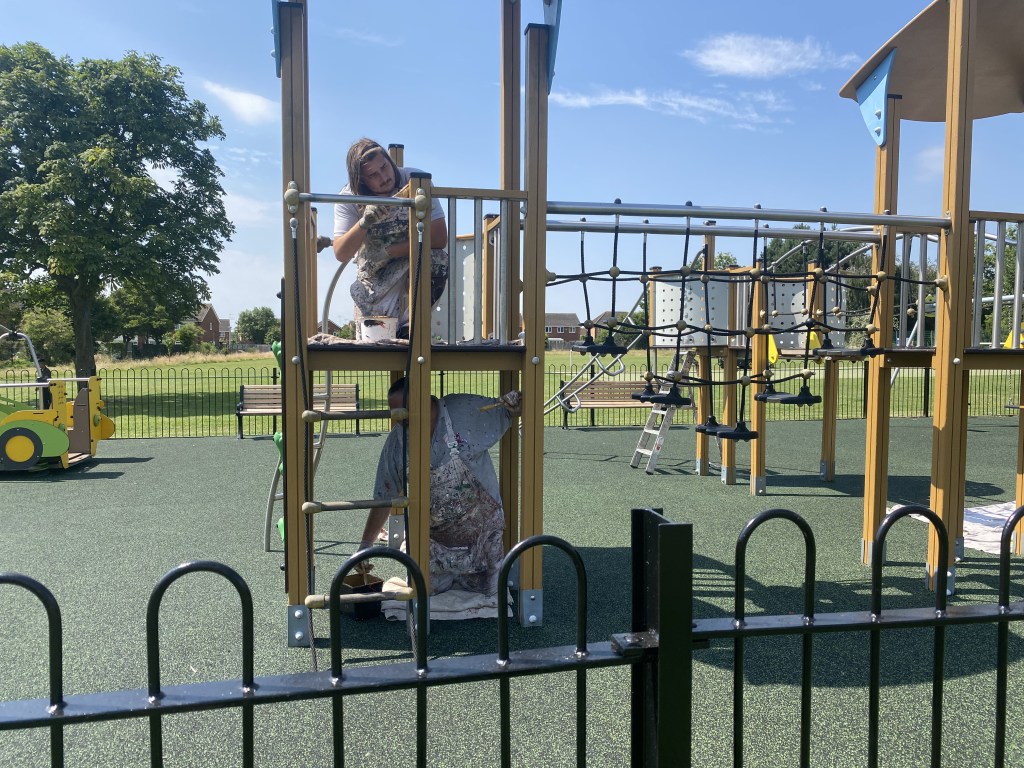

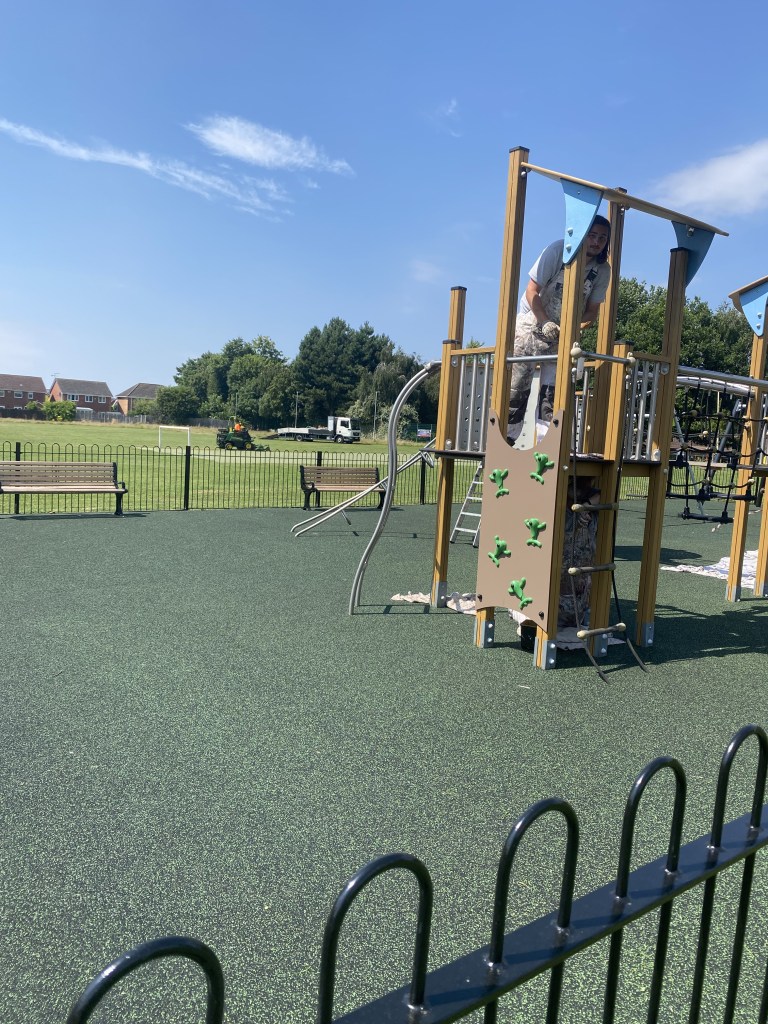

The getting on with doing their job brought the park and the field to life with their care. It made me realise that what we’re missing is a sense of doing things with and for others, developing a sense of the value and values in community.
I’m using the story of how Greythorn park came to be to show how when it was built, just as when David set up Hills Decorators, there was a sense and a feeling of great hope, possibility and that anything was possible if we all worked together.
Greythorn park is round the corner from Uppingham Crescent and Stowe Avenue, a ring of council houses named after public schools built in the 1950’s.
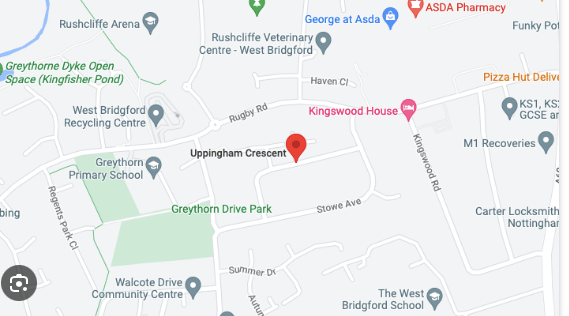
My parents, my dad from the Meadows, merchant navy, full of fun, beans and community hope, my mum over here from Dublin after Plessey made her redundant from her job as a technician to be a nanny for her brother who’d bought a pub in Aspley.
To give you a feel for the optimism, shared vision of people from the neighbourhoods of Nottingham, my dad wanted to start a mobile library around the Meadows and he wasn’t unusual, people at that time automatically thought of their neighbours, their communities, their neighbourhood and that improvement could be measured by how much everyone’s lives could improve.
My dad set up an electrical business with a partner.
It was all about self improvement. They’d heard that there were to be new council houses in West Bridgford. At first they lived in a caravan and then a flat before moving into their new council house in 1958. Uppingham Crescent looked over onto farmland: Glebe Farm and the community grew, new houses were built across from us.
But no park for the children until Jean Stansfield who lived across the road from us, who worked for NALGO (National Association of Local Government Officers, now Unison) got everyone together, parents, grandparents, teenagers, children to start a petition for a park.
We all walked the length of the Wilford Hill Estate and presented our petition to the council and our wish, if you like, was discussed and granted: 1968, a year before Dave set up Hills Decorators West Bridgford Urban District Council gave us our park.

 signsofanopencity
You must be logged in to post a comment.