
Featured image: Postcard from Trinidad
Famous for turning the order of things upside down with carnival: re reading tradition the present, the
future: the University of the West Indies research cluster looking again, reflecting back onthe story of
the caribbean bringing to light the history of the people who gave the islands freedoms to be free.
Carnival in motion brings the technologies of now: solar, wind, water power and embodies a history
shaped by colonial plantation (sugar, cocoa, cotton coffee, bananas, plantain), energy: Pitch Lake oil
natural gas and petrochemicals, very appropriate now with the Institute of Sustainable Development
Budget-Statement-FY-2026-2Download
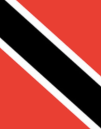
In March 2026 the country is flying its distinctive flag to bring a culture of peace:
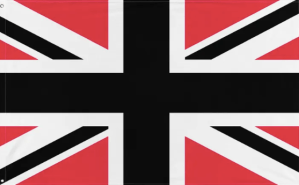
British Trinidadian Union Jack again on Etsy
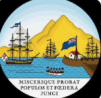
The first colonial map was drawn like a fable:
whereas the colonial flag flown before 1962 had a ship arriving at port and a
British flag top left
(from the eighteenth century until the twentieth):
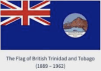
It was a practical statement of what the colonial mission was at that time:
it’s ours:
British sea power (see Bridget Brereton on a Trinidadian counter narrativeBy 1962 and independence look at both flags designed for a modern, forward thinking era
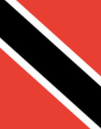
The Trinidad independence flag: a square cut into two creating two triangles that are coloured red. The
triangles are bounded left to right along their hypotenuse by the colour black (representing people
moving the earth forward in strength and unity), black itself itself bounded by two white lines
representing a dynamic equality of land, sea and people while the red represents capacity, energy,
courage and warmth because of the incredible human diversity on the islands.
Trinidad has Amerindian, Afro Trinidadian, Syrian, Chinese, French, Corsican, Italian, Spanish heritage
people) and Tobago (historically African and Tobagonian heritage). The population in 2025 of Trinidad:
Total Male Female
0 – 14 281,598 143,344 138,253
15 – 64 963,579 486,810 476,769
65+ 122,587 56,092 66,495
All ages 1,367,764 686,246 681,518
Today Trinidad and Tobago have twenty diplomatic missions
accredited to Trinidad and Tobago where Trinidad protects its citizens and promotes economic
development and culture.
Twenty foreign missions in the country these manage diplomatic relations, support their citizens and
provide opportunities for trade and exchange.
Thirty three honourary consuls (helping people from their country in the host country because of local
knowledge, skills this is a high status unpaid position these manage diplomatic relations, support their
citizens and provide opportunities for trade and exchange, thirty three honourary consuls (helping
people from their country in the host country because of local knowledge, skills, unpaid, high status):
Nine High Commissions (a diplomatic exchange between countries in the commonwealth)
and because of the recent American and Israeli action across our world you can understand the
desire of everyone to quickly re-establish safety, stability, peace: culture is a strong tool to make
things happen, not just of internal image and diplomacy: a dynamic economic development in
2026.
In March 2026, the country is navigating recovery marked by efforts to diversify. Central to
economic prosperities is the idea of Caribbean (always) in Transit: given the shadow of what will
happen next in relation to oil and gas Trinidadians are keen to work with the world to modernise and
share away from energy reliance, deficits, and foreign exchange shortages, with a focus on non-energy
sector growth: Fashion, Film and Music. Founded by Dr Barrow Maignan the Caribbean in Transit team
have just held a symposium in Trinidad (March 10-12 2026) attended by French Ambassador to
Trinidad Guillaume Pierre.
The idea is to fuse carnival, fashion, film, music and technology to support and nurture the caribbean
across the generations, across the world.
Exactly what we need!


